

Bhadaure Toilet Models
Five Sanitation Designs — Drawings, Quantities & Costs
Bhadaure Eco-Sanitation Team · IOE Pulchowk
Bhadaure is a sloped, water-scarce Dalit settlement on expansive red-clay soil. Standard pour-flush + soak-pit toilets are often unfeasible here. These five models give a graded menu — from a cheap waterless unit to a full piped-water toilet — each fully costed at district rates.
37.5% Sanitation Deficit
Many households share toilets or practise open defecation.
Impermeable Clay
Soak-pits fail in the expansive red clay across sloped terrain.
Water Scarcity
Long water-fetch times limit water-reliant pour-flush systems.
Community Equity
Households ready to contribute labour & local materials.
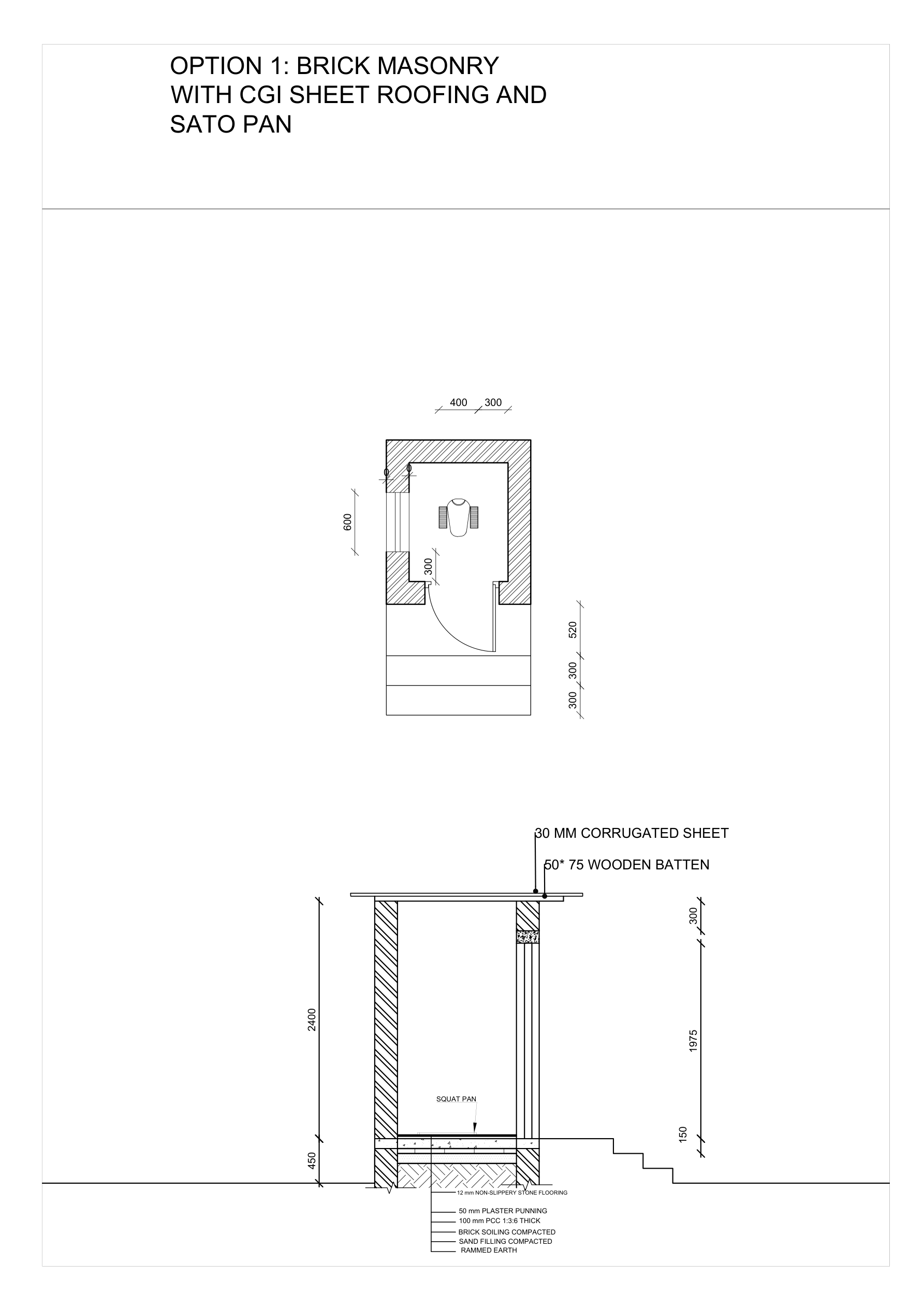
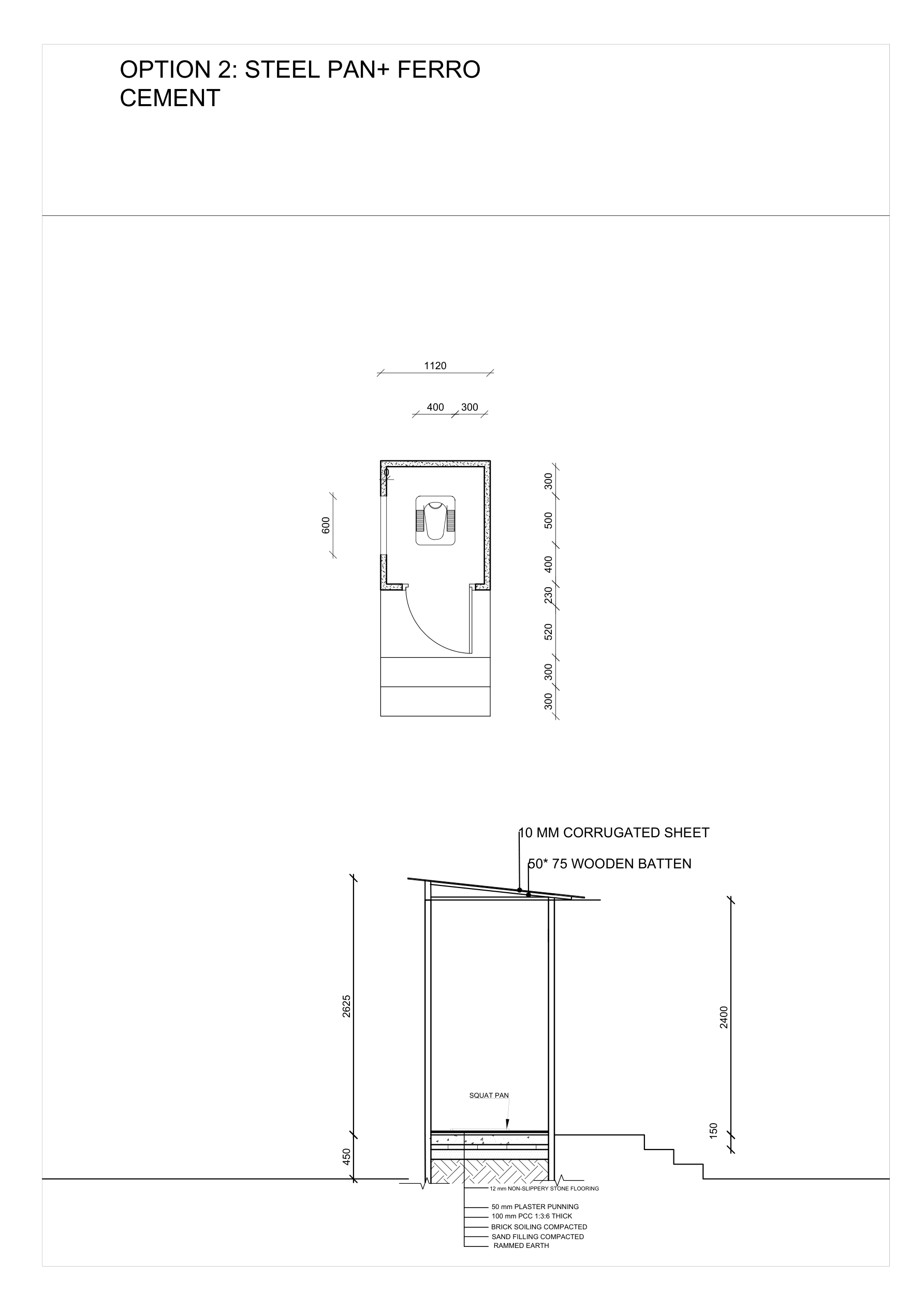
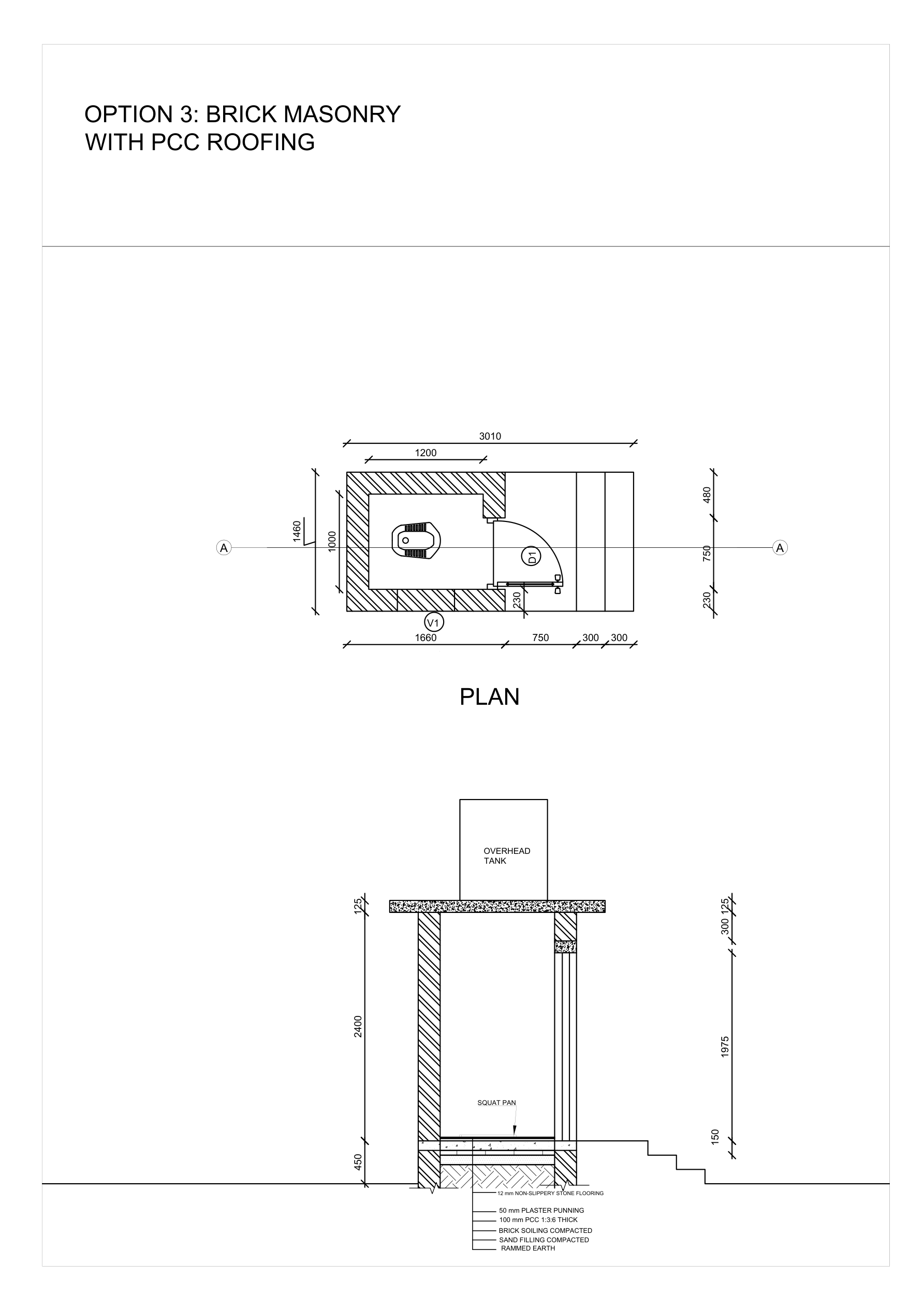
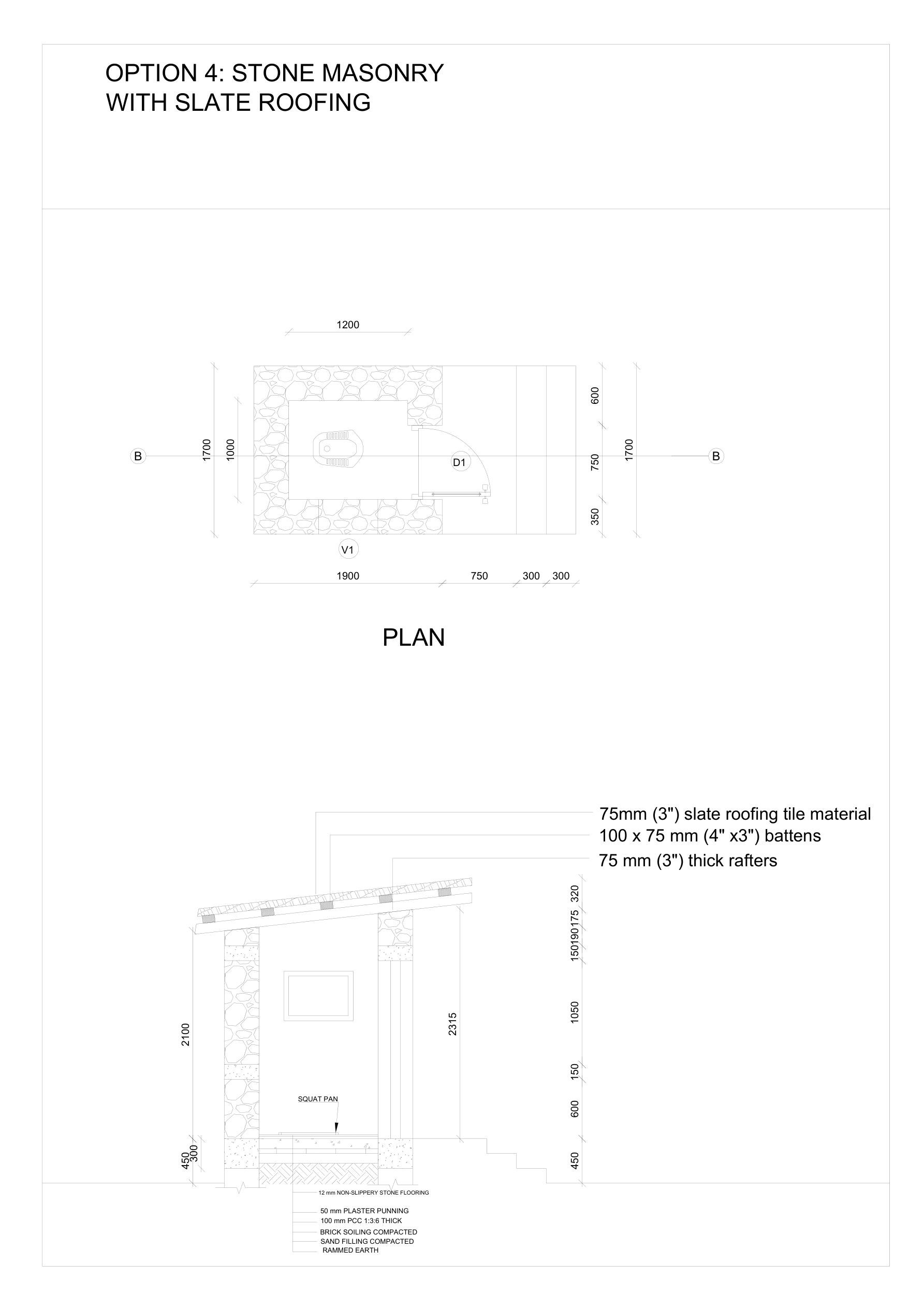
Each design is dimensioned with a plan and a section (millimetres). Detailed drawings follow per option.
All five models share the same foundation and floor build-up; they differ in their walls, roof and sanitation fixture.
350 mm stone footing + M20 RC plinth / sill / lintel bands; trench 0.45 m × 0.40 m.
Plinth + sill + lintel bands in M20 (1:1.5:3), 100 mm deep, tie the walls together — important on Bhadaure’s sloping, expansive-clay ground.
Brick · CGI · SATO
Low-cost brick toilet with corrugated-sheet roof and a water-saving SATO pour-flush pan.
A simple brick room over a SATO pour-flush pan. Its self-sealing trap opens only when flushed — blocking odour and flies while using barely a litre of water, ideal for water-scarce Bhadaure. Waste is led to an offset pit/tank.
Among the lowest-cost options — simple brick box
SATO self-sealing pan needs very little water (good for water-scarce Bhadaure)
Familiar brick masonry — local masons can build it
Light CGI roof — easy to carry and fix
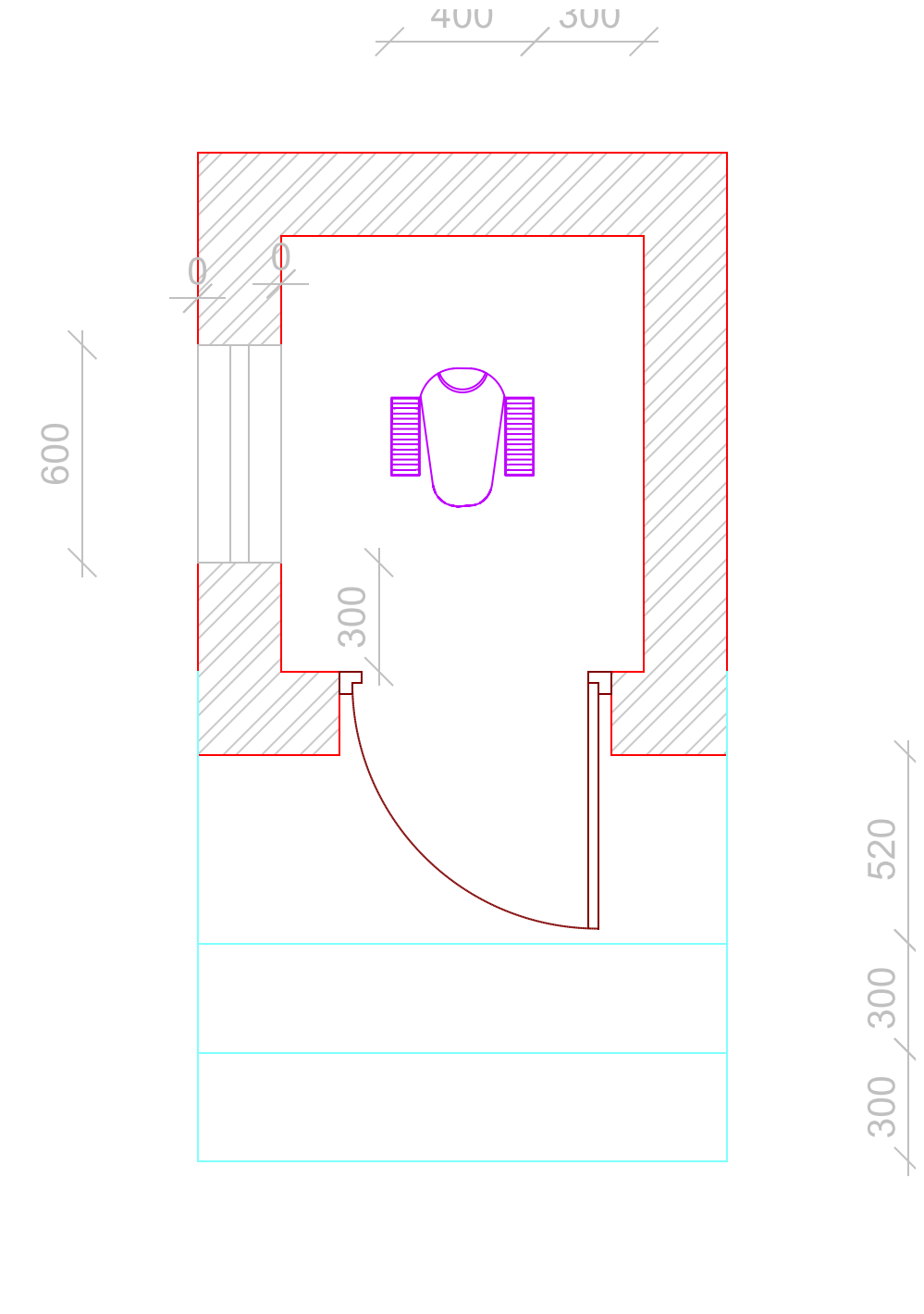
600, 520, 400, 300 (×4) mm
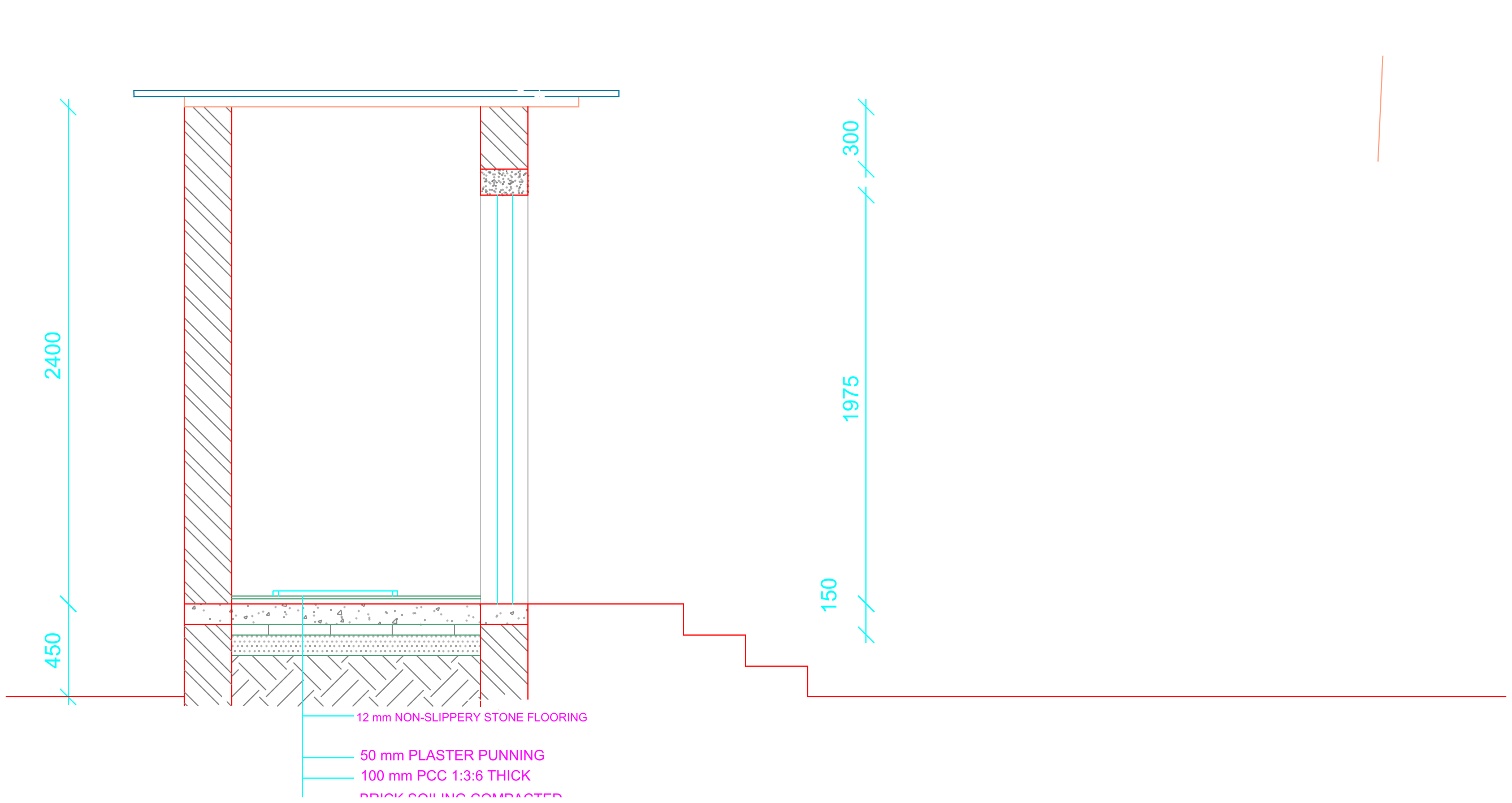
2400 (wall ht), 1975 (door), 450 (plinth), 300, 150 mm
Self-sealing trap; ~1 L per flush
0.75 × 1.95 m leaf
0.45 × 0.45 m, cross-airflow
350 mm stone footing + M20 RC plinth / sill / lintel bands; trench 0.45 m × 0.40 m.
| External footprint | 1.46 m × 1.66 m |
| Internal clear | 1.00 m × 1.20 m |
| Walls | 230 mm brick masonry (1:4) |
| Overall height | 2.40 m |
| Roof | 30 mm CGI corrugated sheet on 50×75 timber battens |
| Substructure | 350 mm stone footing + RC plinth/sill/lintel bands |
| Sanitary fixture | SATO pour-flush pan + P/S trap |
| Door / window | 0.75 × 1.95 m / 0.45 × 0.45 m |
Quantities by long wall / short wall · District Rate F.Y. 2082/083.
| # | Item of Work | Unit | Qty | Rate | Amount (Rs) |
|---|---|---|---|---|---|
| 1 | Earthwork in excavation (ordinary soil) | m^3 | 1.044 | 554 | 579 |
| 2 | Stone masonry (II class) 1:6 c/s — substructure | m^3 | 0.304 | 6,220 | 1,894 |
| 3 | RC beam & sill bands, M20 1:1.5:3, 100 mm | m^3 | 0.245 | 13,237 | 3,239 |
| 4 | Compacted earth fill | m^3 | 0.240 | 857 | 206 |
| 5 | Sand fill | m^3 | 0.120 | 2,742 | 329 |
| 6 | Brick soling, 1 flat layer | m^2 | 1.200 | 858 | 1,029 |
| 7 | PCC 1:3:6, 100 mm thick | m^3 | 0.120 | 11,199 | 1,344 |
| 8 | 50 mm cement-sand screed / punning floor | m^2 | 1.200 | 834 | 1,001 |
| 9 | 12 mm non-slippery stone (slate) flooring | m^2 | 1.200 | 1,737 | 2,085 |
| 10 | 1st class brickwork in 1:4 c/s mortar — walls | m^3 | 2.309 | 13,675 | 31,573 |
| 11 | 12 mm cement plaster 1:4 | m^2 | 22.206 | 492 | 10,927 |
| 12 | Woodwork for frames (Sal) — door & window | m^3 | 0.051 | 221,281 | 11,197 |
| 13 | Woodwork for shutters (panelled) | m^2 | 1.357 | 9,326 | 12,655 |
| 14 | Roof timber — rafters 75x50 + battens 50x25 | m^3 | 0.063 | 141,101 | 8,889 |
| 15 | CGI sheet roofing, 0.5 mm incl. fixing | m^2 | 2.787 | 1,108 | 3,089 |
| 16 | Reinforcement, TMT bars (cut/bend/fix) | kg | 28.820 | 136 | 3,928 |
| 17 | Steps — mass concrete M20 | m^3 | 0.425 | 12,828 | 5,456 |
| 18 | SATO pan set | set | 1.000 | 3,377 | 3,377 |
Among the lowest-cost options — simple brick box
SATO self-sealing pan needs very little water (good for water-scarce Bhadaure)
Familiar brick masonry — local masons can build it
Light CGI roof — easy to carry and fix
Households wanting an affordable, durable masonry toilet where a small amount of water is available for the SATO pan.
Ferro-cement · Steel pan
Lightweight, fast-to-build ferro-cement shell — the cheapest of the five models.
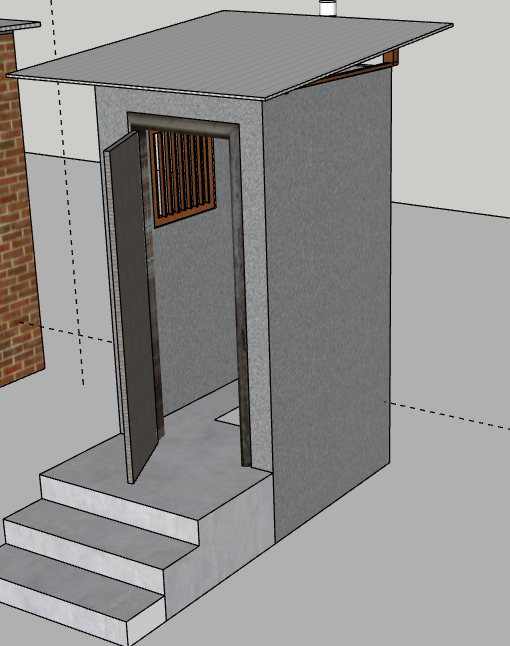
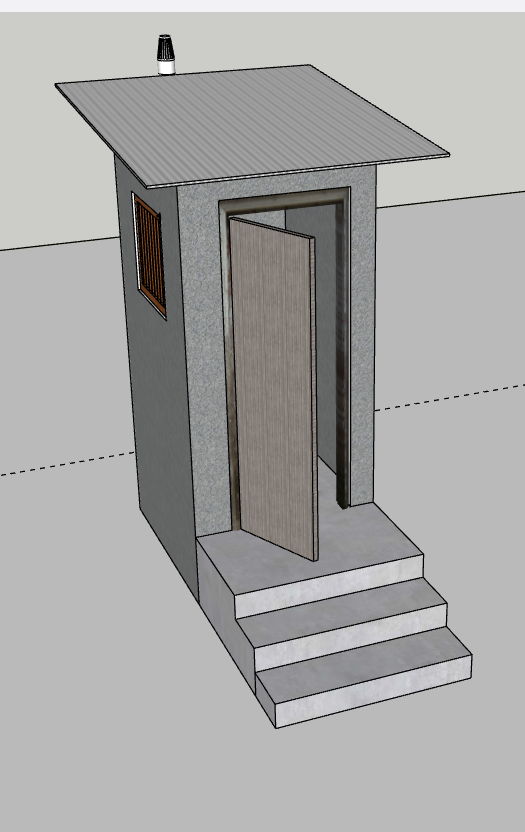
A thin ferro-cement shell (steel wire-mesh plastered with 1:3 cement mortar) forms the walls and roof in one light, monolithic piece — fast and cheap. A stainless-steel squat pan serves the user; no RC bands are required.
Lightest structure — least material to carry to site
Fast to cast; thin wire-mesh + mortar shell
Cheapest model overall
Steel pan is robust and reusable
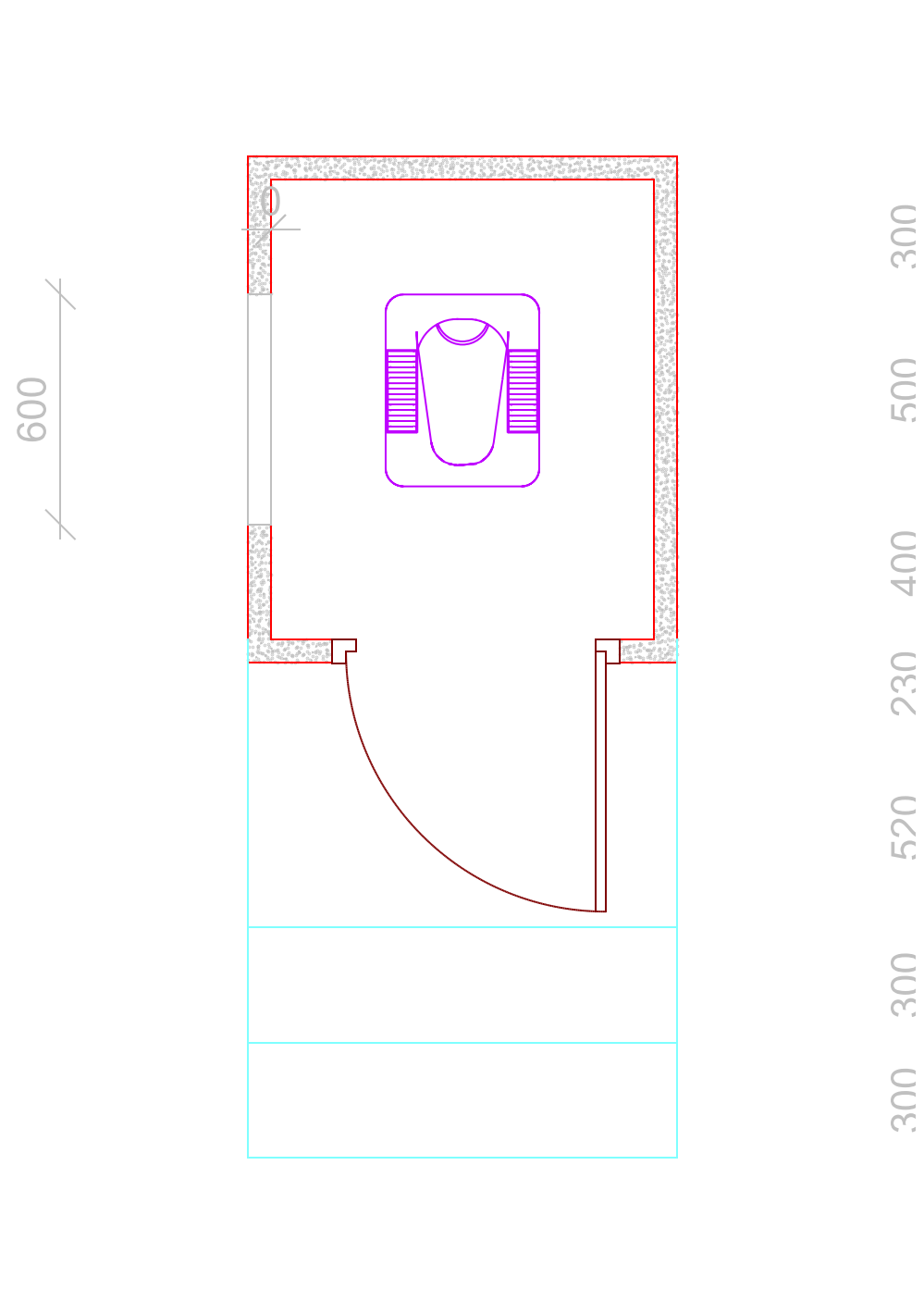
1120, 600, 520, 500, 400 (×2), 300 (×4), 230 mm
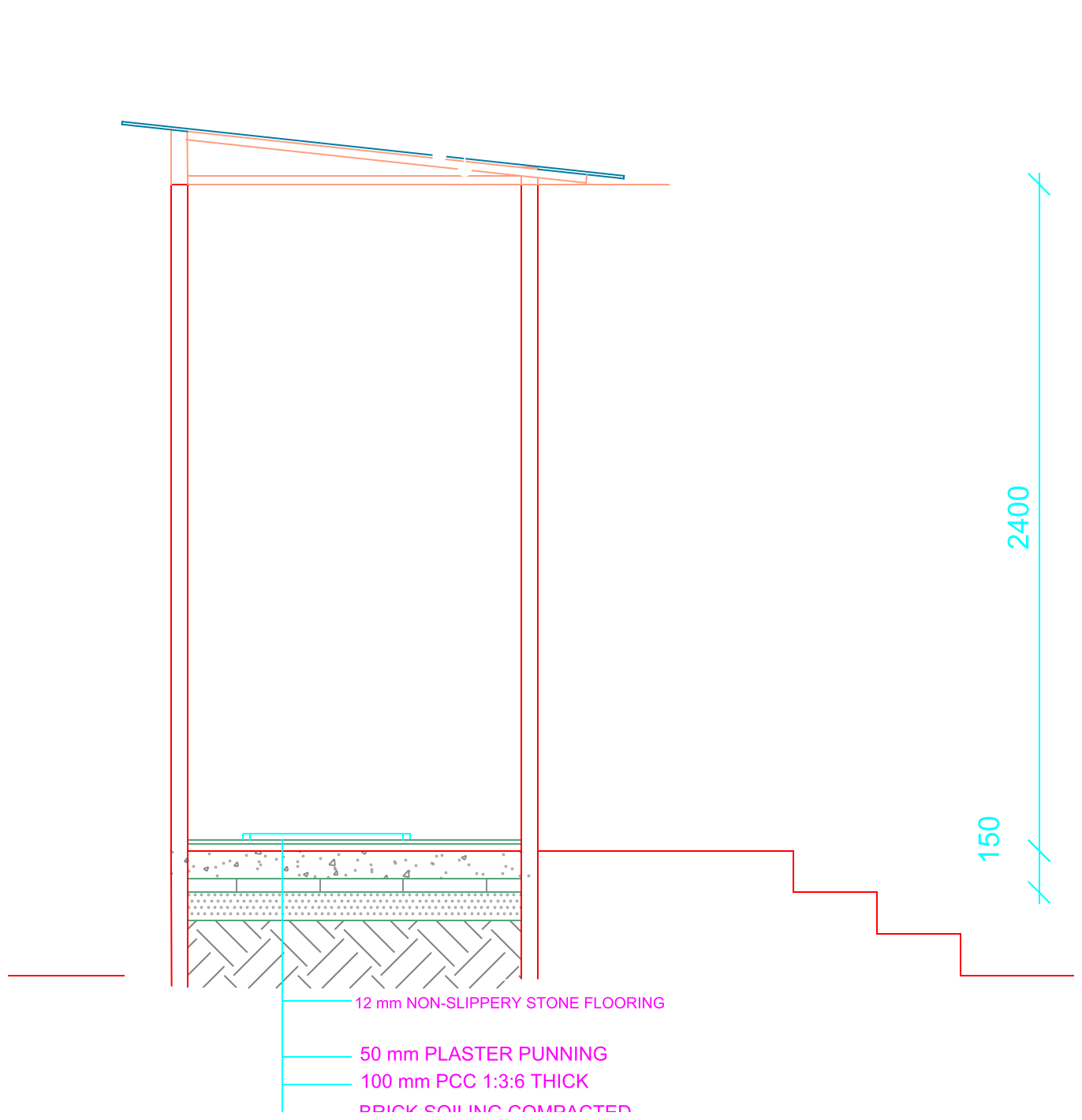
2625 / 2400 (mono-pitch), 450 (plinth), 150 mm
Durable stainless pan + trap
~40–50 mm walls & roof
Light openings
350 mm stone footing + M20 RC plinth / sill / lintel bands; trench 0.45 m × 0.40 m.
| External footprint | 1.12 m × 1.32 m |
| Internal clear | 1.02 m × 1.22 m |
| Walls | ~40–50 mm ferro-cement shell (wire-mesh + 1:3 mortar) |
| Overall height | 2.40 → 2.625 m (mono-pitch) |
| Roof | Ferro-cement / light CGI sheet |
| Substructure | 350 mm stone footing (no RC bands — monolithic shell) |
| Sanitary fixture | Stainless-steel squat pan + trap |
| Door / window | 0.75 × 1.95 m / 0.45 × 0.45 m |
Quantities by long wall / short wall · District Rate F.Y. 2082/083.
| # | Item of Work | Unit | Qty | Rate | Amount (Rs) |
|---|---|---|---|---|---|
| 1 | Earthwork in excavation (ordinary soil) | m^3 | 1.058 | 554 | 587 |
| 2 | Stone masonry (II class) 1:6 c/s — substructure | m^3 | 0.309 | 6,220 | 1,920 |
| 3 | Compacted earth fill | m^3 | 0.249 | 857 | 213 |
| 4 | Sand fill | m^3 | 0.124 | 2,742 | 341 |
| 5 | Brick soling, 1 flat layer | m^2 | 1.244 | 858 | 1,068 |
| 6 | PCC 1:3:6, 100 mm thick | m^3 | 0.124 | 11,199 | 1,393 |
| 7 | 50 mm cement-sand screed / punning floor | m^2 | 1.244 | 834 | 1,038 |
| 8 | 12 mm non-slippery stone (slate) flooring | m^2 | 1.244 | 1,737 | 2,162 |
| 9 | Ferro-cement shell ~40 mm (wall & roof) | m^2 | 11.646 | 2,326 | 27,083 |
| 10 | Woodwork for shutters (panelled) | m^2 | 1.000 | 9,326 | 9,326 |
| 11 | Reinforcement, TMT bars (cut/bend/fix) | kg | 5.510 | 136 | 751 |
| 12 | Steps — mass concrete M20 | m^3 | 0.200 | 12,828 | 2,566 |
| 13 | Steel pan set | set | 1.000 | 4,182 | 4,182 |
Lightest structure — least material to carry to site
Fast to cast; thin wire-mesh + mortar shell
Cheapest model overall
Steel pan is robust and reusable
The most budget-constrained households, or where rapid, lightweight construction is the priority.
Brick · RCC · Tank + Basin
Full-service brick toilet with a flat RCC roof, roof-top water tank and a hand-wash basin.
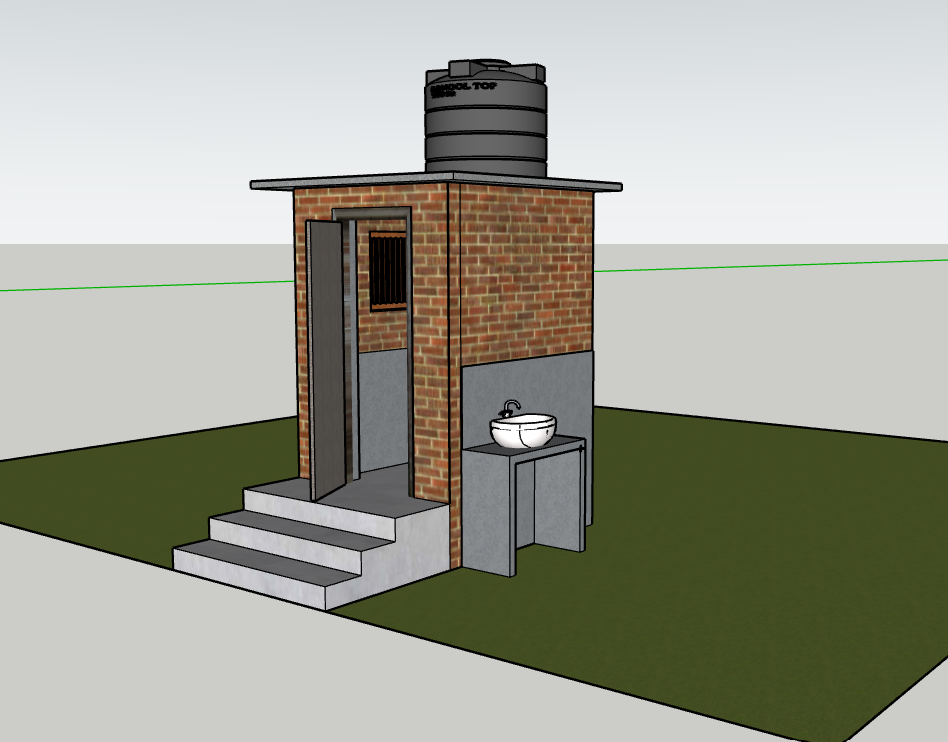
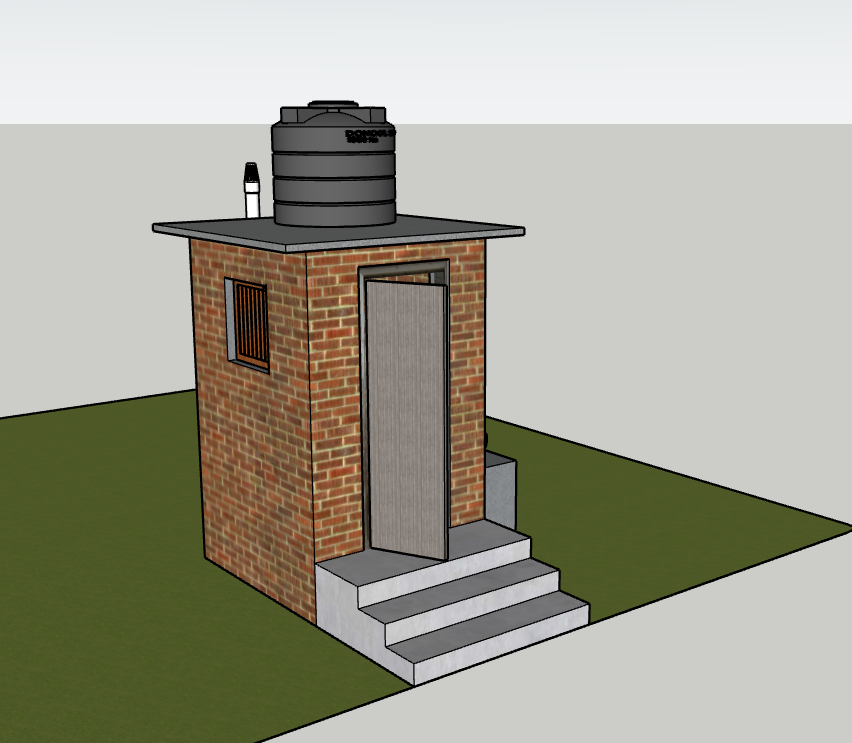
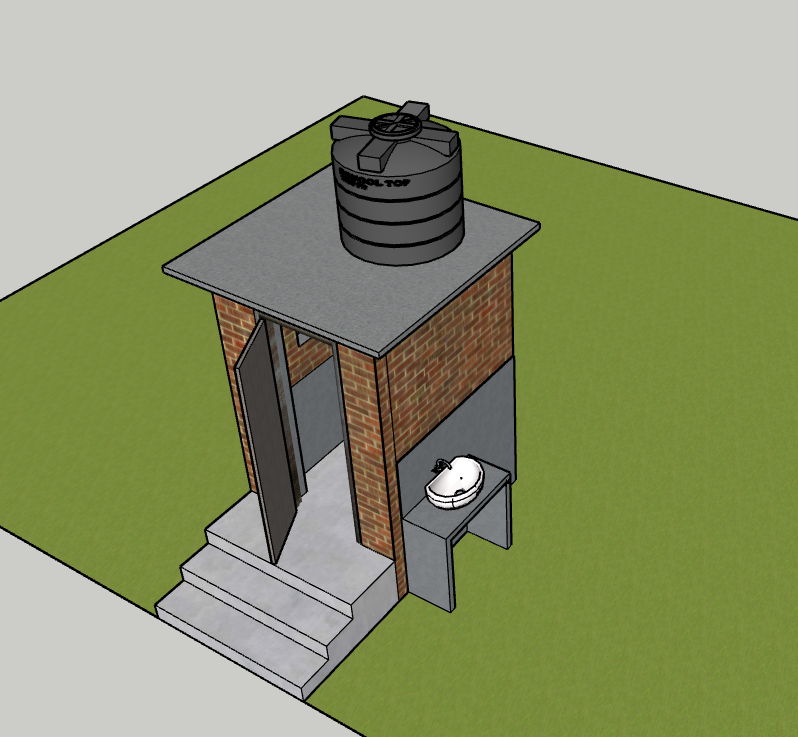
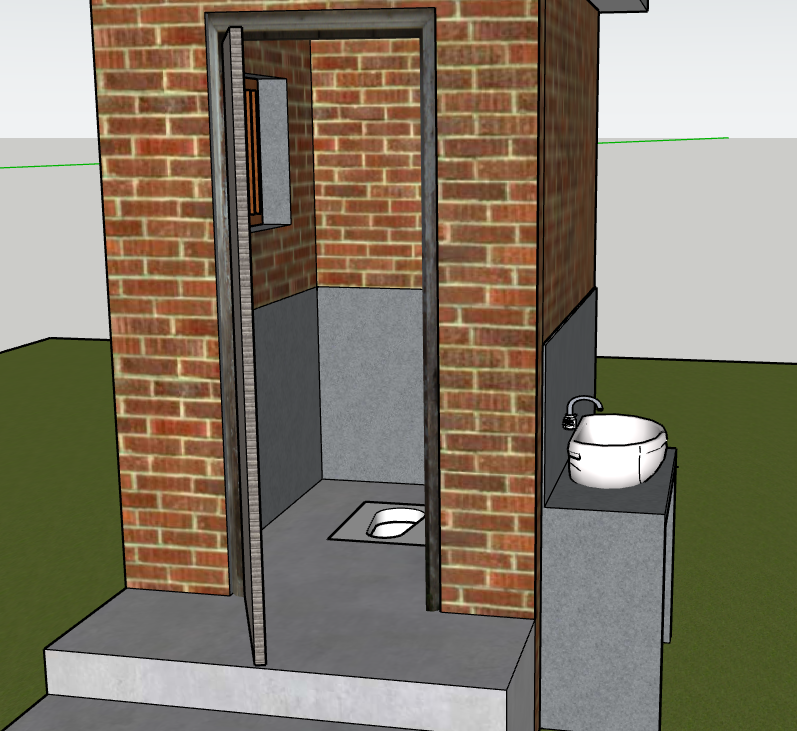
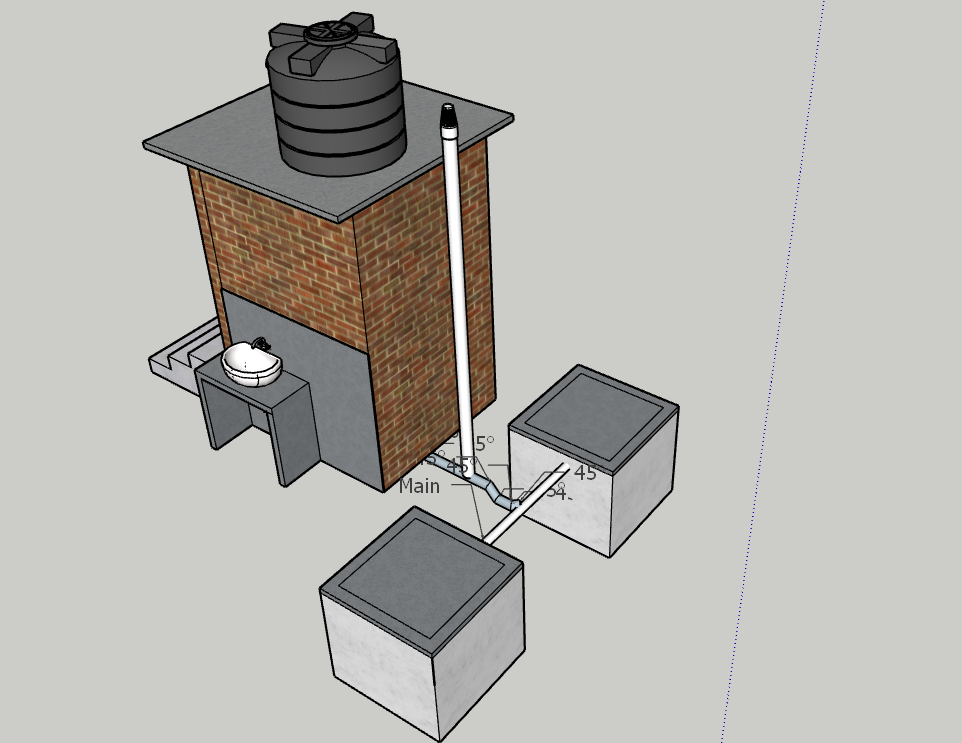
The full-service model: a brick room with a flat RCC roof that carries a 500 L tank. Gravity-fed water supplies the pan and a wash-hand basin, giving a complete, modern wash facility wherever a water source exists.
Piped water from a 500 L roof-top tank — supports flushing & hand-washing
Includes a complete wash-basin point (basin + pedestal + CP tap)
Durable flat RCC roof — long service life
Highest service level of the five
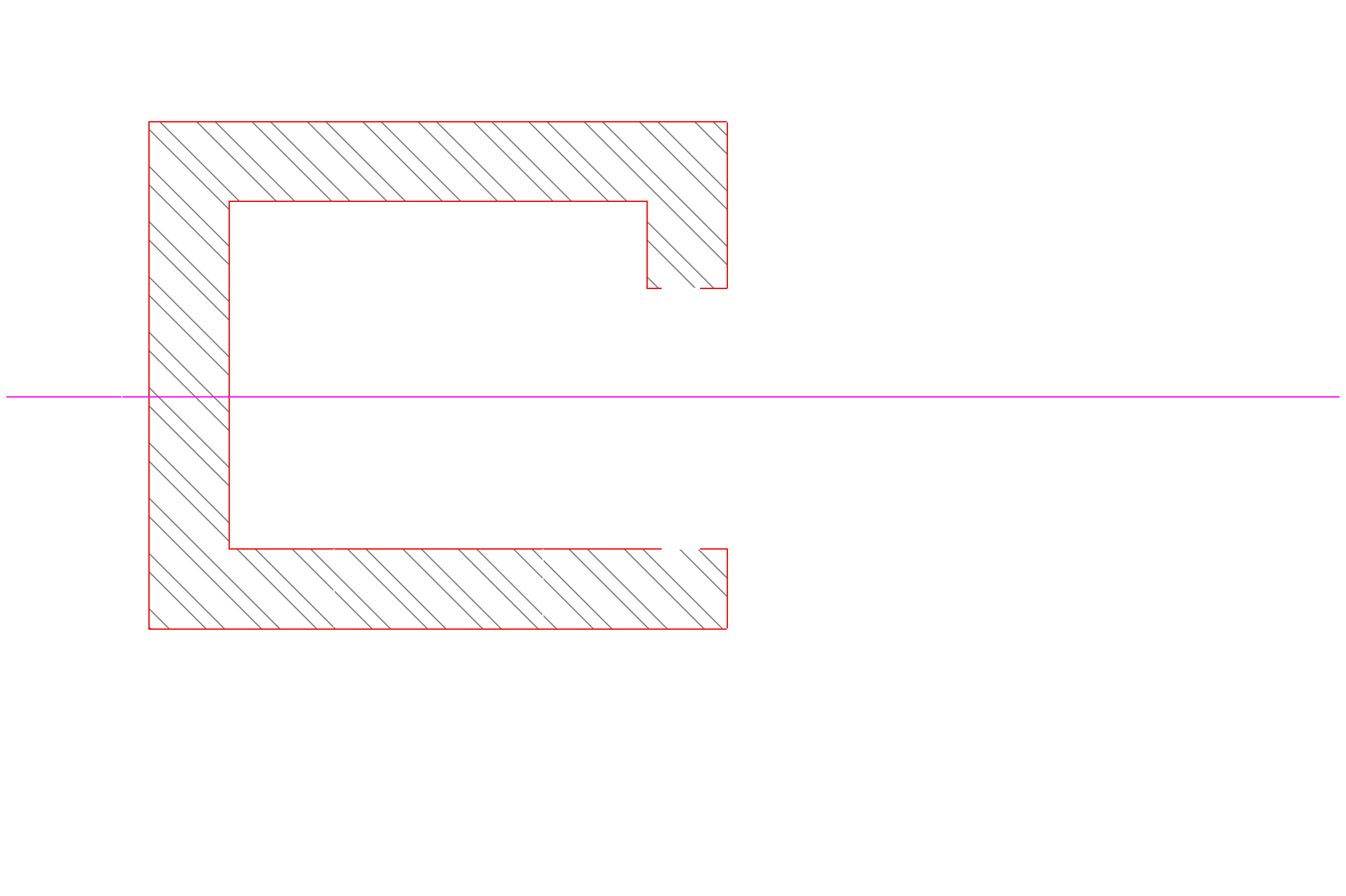
3010, 1660, 1460, 1200, 1000, 750 (×2), 480, 300 (×2), 230 (×2) mm
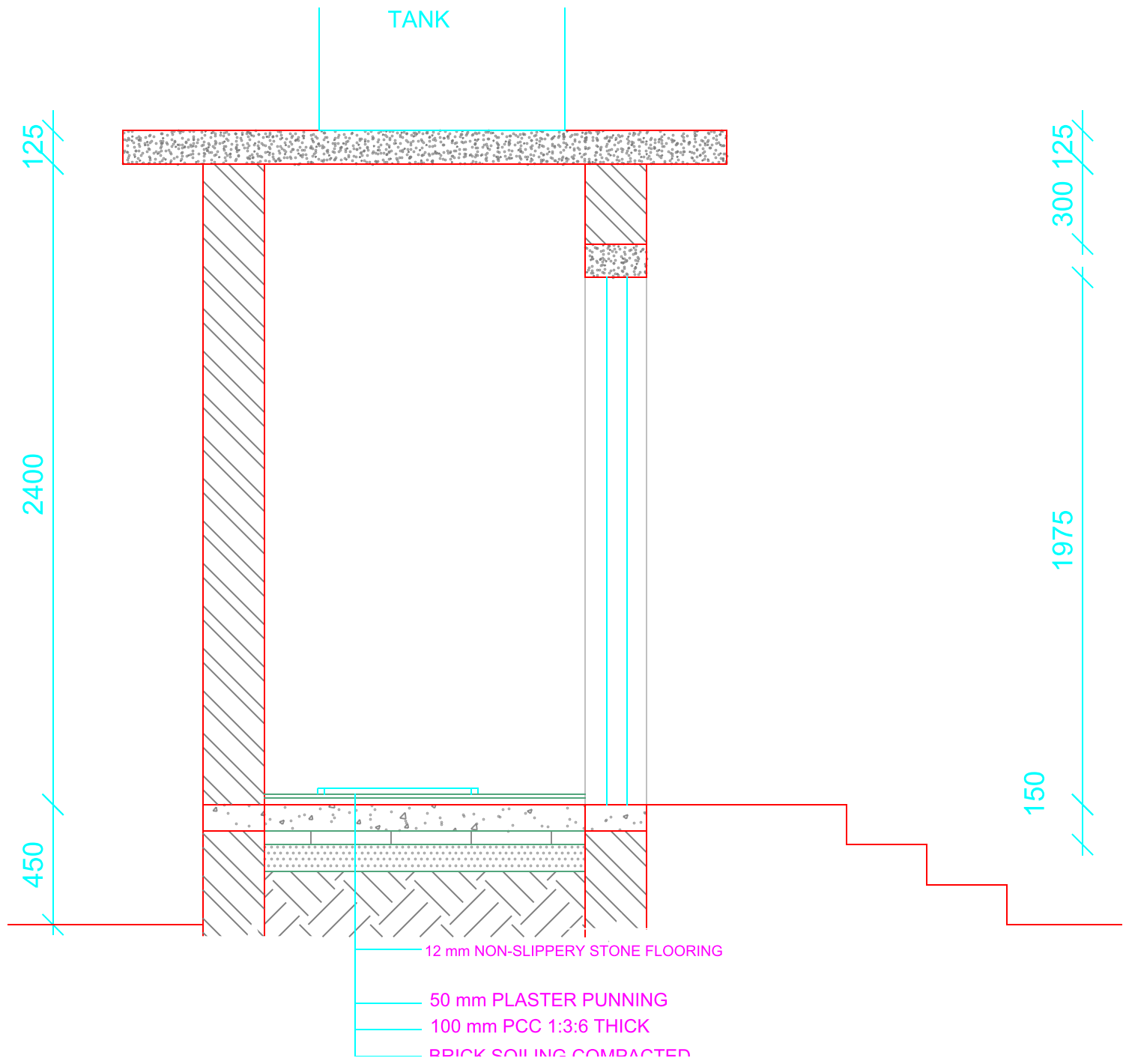
2400 (wall ht), 1975 (door), 450 (plinth), 300, 150, 125 (×2) mm
Pour-flush WC
Gravity-fed supply
Hand-washing point
Lit, ventilated
350 mm stone footing + M20 RC plinth / sill / lintel bands; trench 0.45 m × 0.40 m.
| External footprint | 1.66 m × 1.46 m |
| Internal clear | 1.20 m × 1.00 m |
| Walls | 230 mm brick masonry (1:4) |
| Overall height | 2.40 m |
| Roof | 100 mm RCC slab (M20) — flat roof carrying the tank |
| Substructure | 350 mm stone footing + RC bands |
| Sanitary fixture | Orissa pan + 500 L overhead PVC tank + wash basin (CP tap) |
| Door / window | 0.75 × 1.95 m / 0.45 × 0.45 m |
Quantities by long wall / short wall · District Rate F.Y. 2082/083.
| # | Item of Work | Unit | Qty | Rate | Amount (Rs) |
|---|---|---|---|---|---|
| 1 | Earthwork in excavation (ordinary soil) | m^3 | 1.044 | 554 | 579 |
| 2 | Stone masonry (II class) 1:6 c/s — substructure | m^3 | 0.304 | 6,220 | 1,894 |
| 3 | RC beam & sill bands, M20 1:1.5:3, 100 mm | m^3 | 0.245 | 13,237 | 3,239 |
| 4 | Compacted earth fill | m^3 | 0.240 | 857 | 206 |
| 5 | Sand fill | m^3 | 0.120 | 2,742 | 329 |
| 6 | Brick soling, 1 flat layer | m^2 | 1.200 | 858 | 1,029 |
| 7 | PCC 1:3:6, 100 mm thick | m^3 | 0.120 | 11,199 | 1,344 |
| 8 | 50 mm cement-sand screed / punning floor | m^2 | 1.200 | 834 | 1,001 |
| 9 | 12 mm non-slippery stone (slate) flooring | m^2 | 1.200 | 1,737 | 2,085 |
| 10 | 1st class brickwork in 1:4 c/s mortar — walls | m^3 | 2.309 | 13,675 | 31,573 |
| 11 | 12 mm cement plaster 1:4 | m^2 | 22.206 | 492 | 10,927 |
| 12 | Woodwork for frames (Sal) — door & window | m^3 | 0.051 | 221,281 | 11,197 |
| 13 | Woodwork for shutters (panelled) | m^2 | 1.357 | 9,326 | 12,655 |
| 14 | RCC slab roof, M20 1:1.5:3 (excl. steel/formwork) | m^3 | 0.242 | 14,537 | 3,524 |
| 15 | Formwork / shuttering for slab | m^2 | 2.424 | 1,060 | 2,568 |
| 16 | Reinforcement, TMT bars (cut/bend/fix) | kg | 57.360 | 136 | 7,818 |
| 17 | Steps — mass concrete M20 | m^3 | 0.425 | 12,828 | 5,456 |
| 18 | Sanitary — Orissa pan set (pan+trap+conn.) | set | 1.000 | 5,878 | 5,878 |
| 19 | Overhead PVC water tank 500 L (set) | set | 1.000 | 9,078 | 9,078 |
| 20 | Wash basin set (basin+pedestal+trap+CP tap+connection) | set | 1.000 | 8,005 | 8,005 |
Piped water from a 500 L roof-top tank — supports flushing & hand-washing
Includes a complete wash-basin point (basin + pedestal + CP tap)
Durable flat RCC roof — long service life
Highest service level of the five
Sites with a reliable water source — gives the most complete, modern wash facility.
Stone · Slate
Traditional load-bearing stone masonry with a local slate roof.
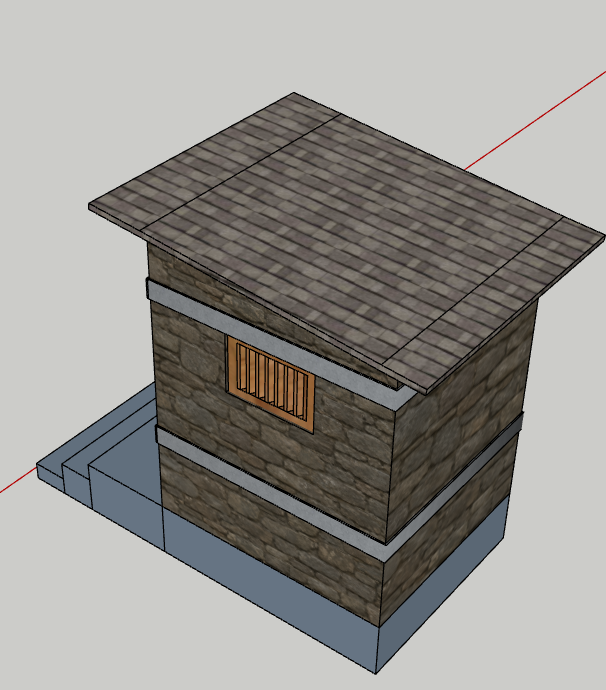
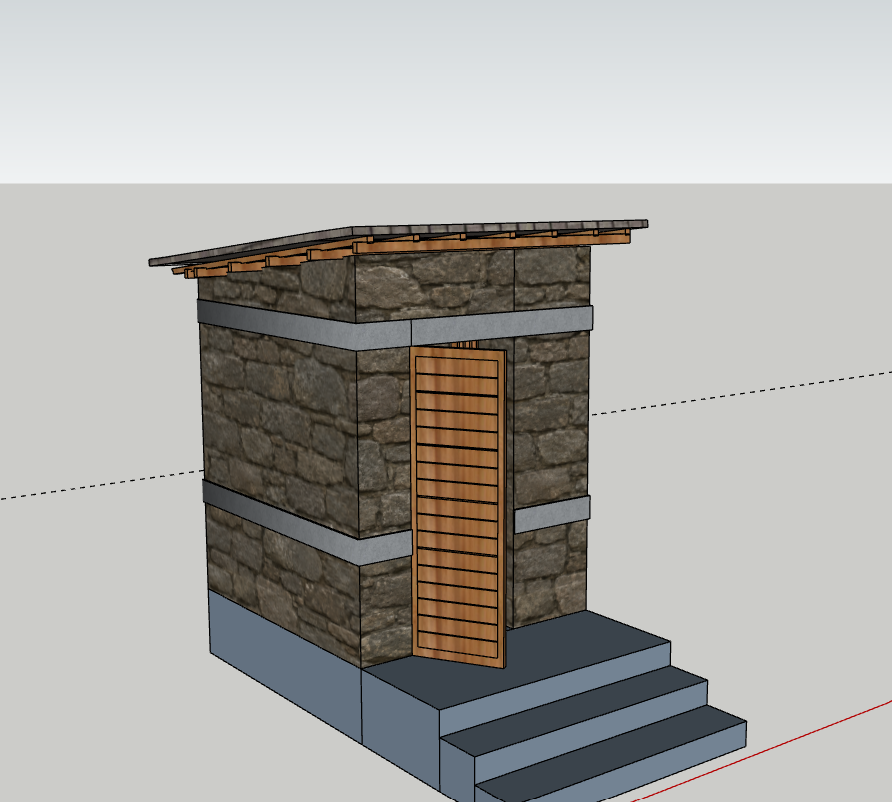
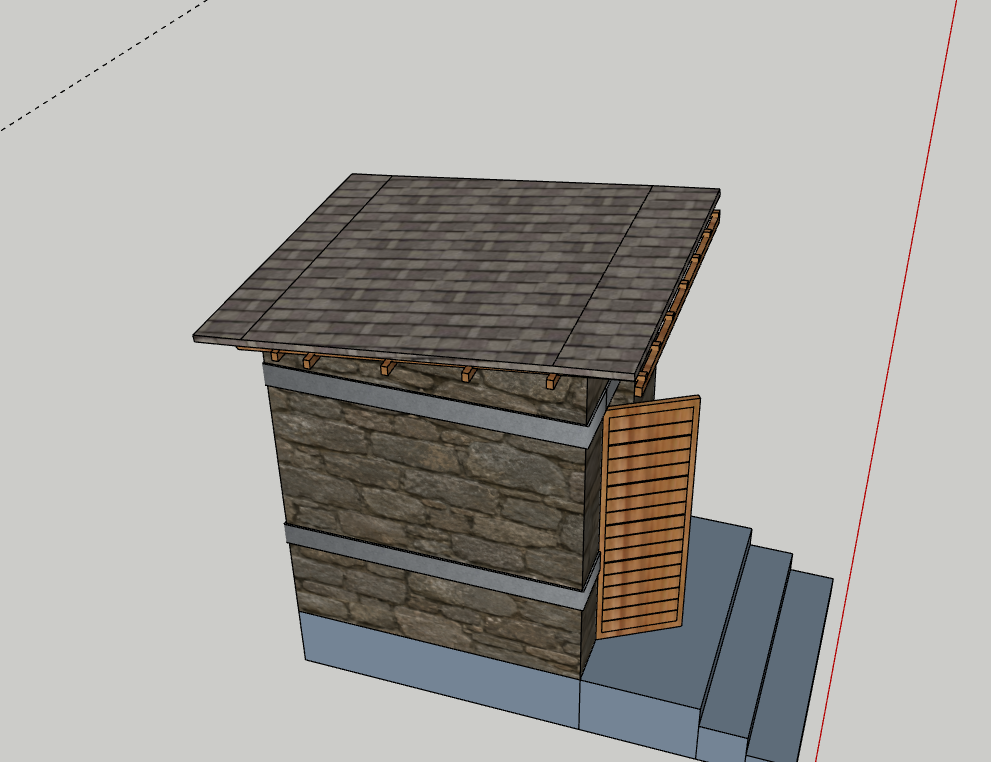
A traditional load-bearing stone toilet with a local slate roof — durable and in keeping with the village vernacular. A pour-flush Orissa pan is used. The heavy 350 mm walls give long life but high carriage unless stone is local.
Uses local stone & slate — fits the vernacular
Very durable, heavy load-bearing walls
Natural materials, low embodied cement
Heaviest — highest carriage if stone is not sourced locally
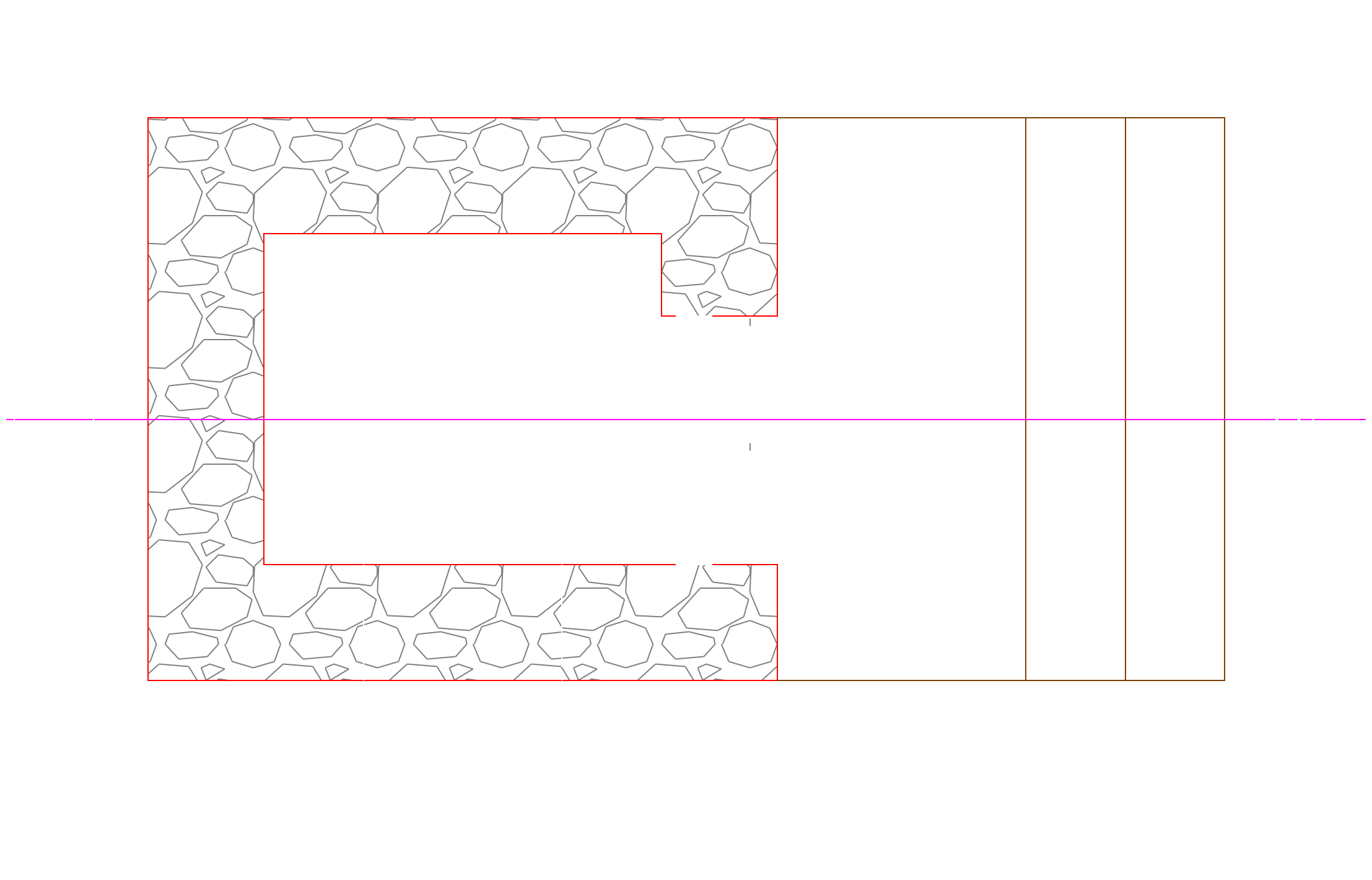
1900, 1700 (×2), 1200, 1000, 750 (×2), 600, 350, 300 (×2) mm
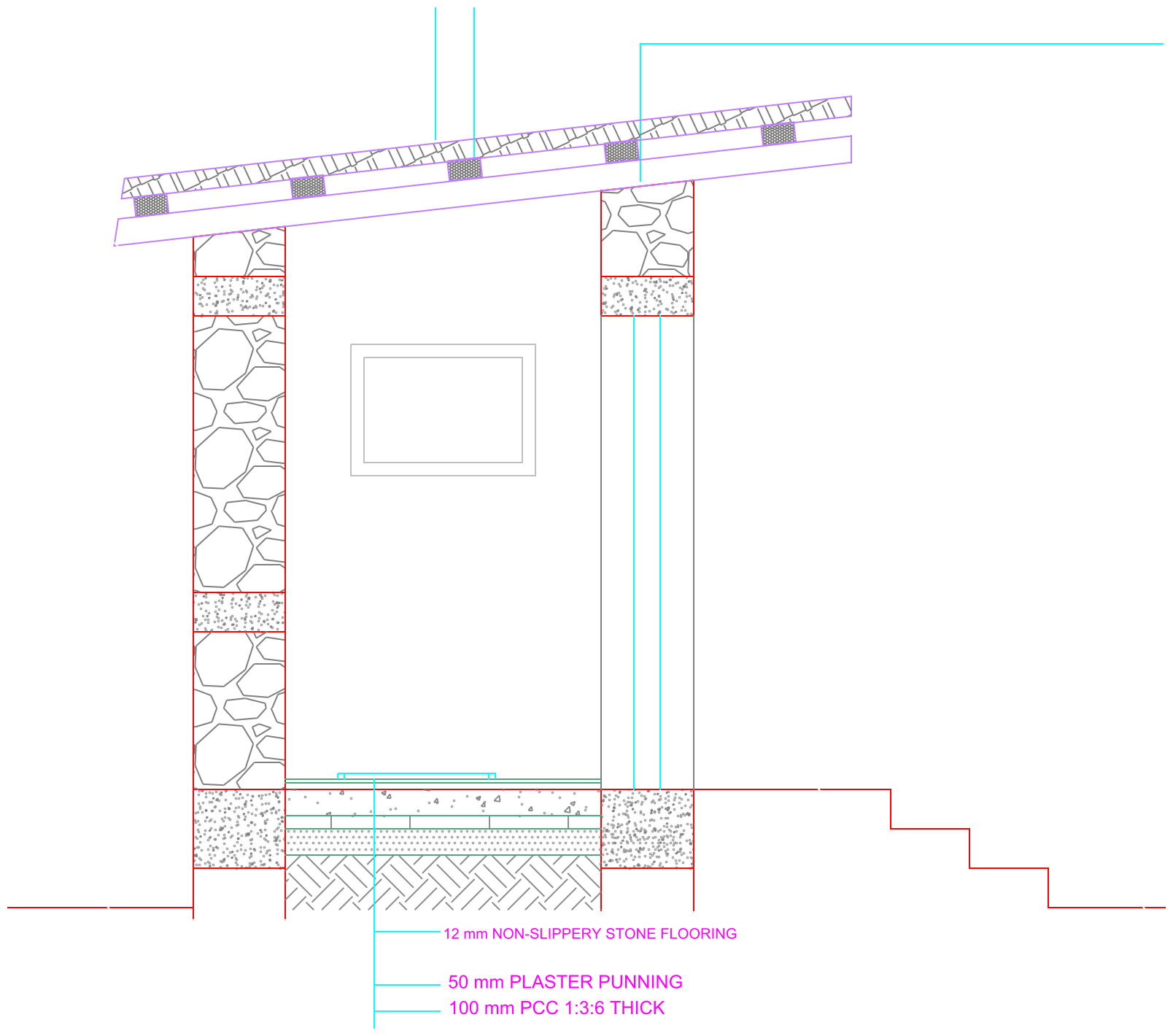
2315 / 2100 (mono-pitch), 1050, 600, 450 (plinth), 320, 190, 175, 150 mm
Pour-flush WC
350 mm load-bearing
Natural, durable tiles
350 mm stone footing + M20 RC plinth / sill / lintel bands; trench 0.45 m × 0.40 m.
| External footprint | 1.90 m × 1.70 m |
| Internal clear | 1.20 m × 1.00 m |
| Walls | 350 mm stone masonry (1:4) |
| Overall height | 2.10 → 2.315 m (mono-pitch) |
| Roof | Local slate tiles on timber rafters/battens |
| Substructure | 350 mm stone footing + RC bands |
| Sanitary fixture | Orissa pan + P/S trap |
| Door / window | 0.75 × 1.95 m / 0.45 × 0.45 m |
Quantities by long wall / short wall · District Rate F.Y. 2082/083.
| # | Item of Work | Unit | Qty | Rate | Amount (Rs) |
|---|---|---|---|---|---|
| 1 | Earthwork in excavation (ordinary soil) | m^3 | 1.044 | 554 | 579 |
| 2 | Stone masonry (II class) 1:6 c/s — substructure | m^3 | 0.304 | 6,220 | 1,894 |
| 3 | RC beam & sill bands, M20 1:1.5:3, 100 mm | m^3 | 0.406 | 13,237 | 5,374 |
| 4 | Compacted earth fill | m^3 | 0.240 | 857 | 206 |
| 5 | Sand fill | m^3 | 0.120 | 2,742 | 329 |
| 6 | Brick soling, 1 flat layer | m^2 | 1.200 | 858 | 1,029 |
| 7 | PCC 1:3:6, 100 mm thick | m^3 | 0.120 | 11,199 | 1,344 |
| 8 | 50 mm cement-sand screed / punning floor | m^2 | 1.200 | 834 | 1,001 |
| 9 | 12 mm non-slippery stone (slate) flooring | m^2 | 1.200 | 1,737 | 2,085 |
| 10 | Stone masonry (I class) 1:4 c/s — walls | m^3 | 3.491 | 7,259 | 25,344 |
| 11 | Woodwork for frames (Sal) — door & window | m^3 | 0.051 | 221,281 | 11,197 |
| 12 | Woodwork for shutters (panelled) | m^2 | 1.357 | 9,326 | 12,655 |
| 13 | Roof timber — rafters 75x50 + battens 50x25 | m^3 | 0.084 | 141,101 | 11,796 |
| 14 | Slate roofing on battens | m^2 | 6.477 | 2,040 | 13,211 |
| 15 | Reinforcement, TMT bars (cut/bend/fix) | kg | 47.810 | 136 | 6,516 |
| 16 | Steps — mass concrete M20 | m^3 | 0.425 | 12,828 | 5,456 |
| 17 | Sanitary — Orissa pan set (pan+trap+conn.) | set | 1.000 | 5,878 | 5,878 |
Uses local stone & slate — fits the vernacular
Very durable, heavy load-bearing walls
Natural materials, low embodied cement
Heaviest — highest carriage if stone is not sourced locally
Where stone & slate are available near the site — durable and traditional, but watch the carriage cost.
UDDT (waterless)
Urine-diverting dry toilet — waterless, raised on a twin collection vault. The eco-sanitation answer for Bhadaure.
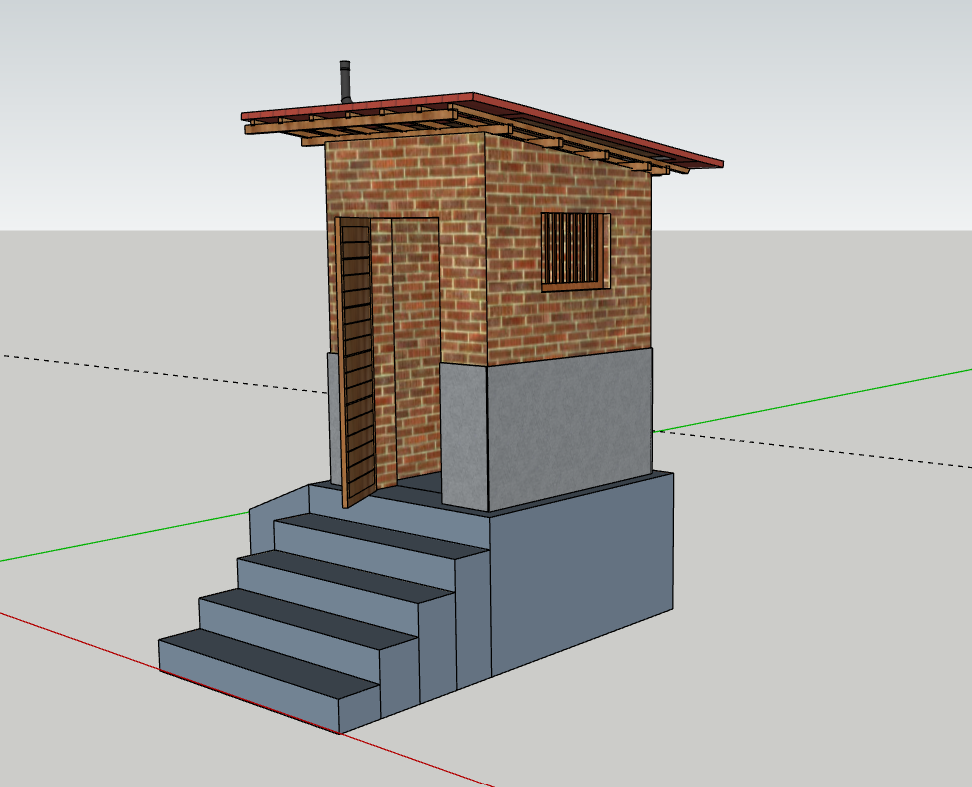
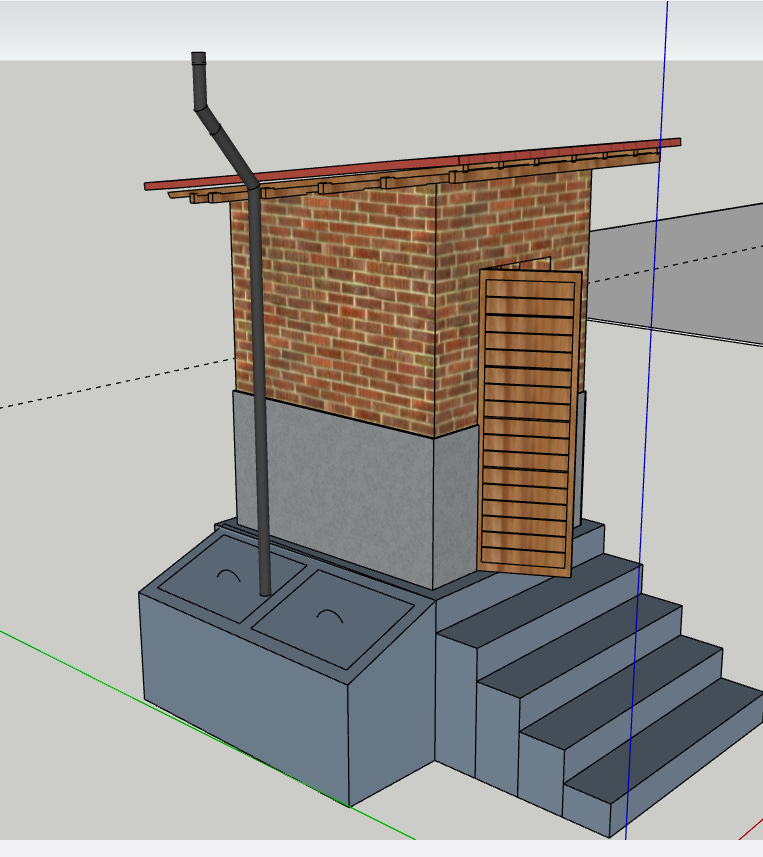
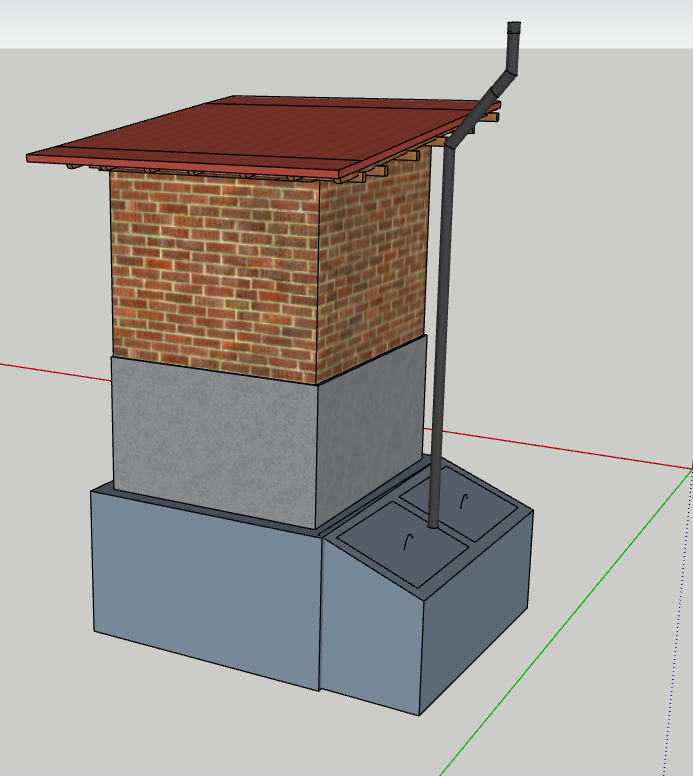
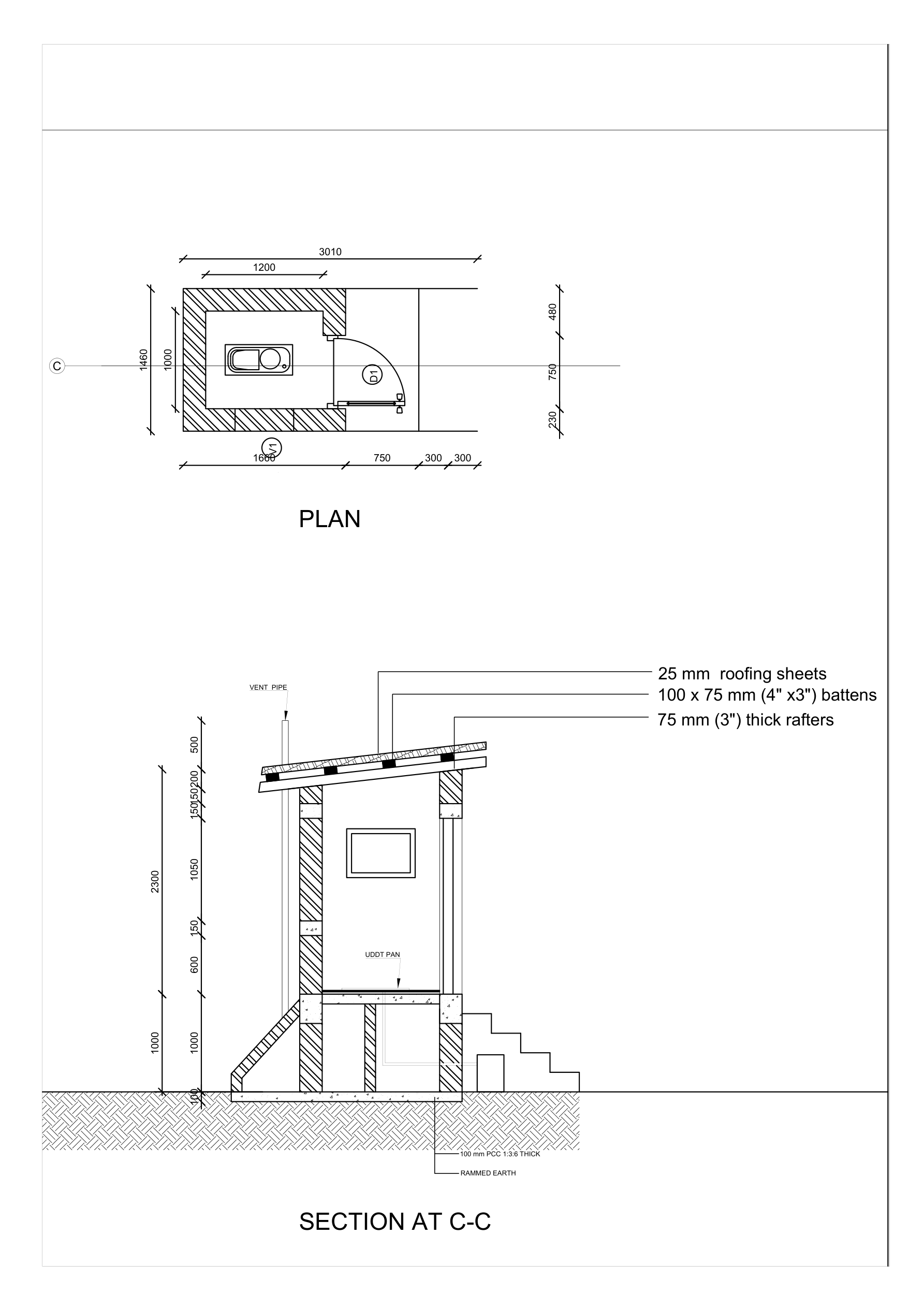
A waterless urine-diverting dry toilet (UDDT). The special pan separates urine (drained at the front) from faeces (dropped into one of two sealed vaults). A full vault rests and composts while the second is used — yielding safe soil conditioner. No water, no soak-pit: the strongest fit for Bhadaure’s clay soil.
Completely WATERLESS — ideal where water is scarce
Urine diversion + twin vaults = safe reuse / composting
No soak-pit needed — suits the impermeable red-clay soil
True eco-sanitation; nutrients returned to farmland
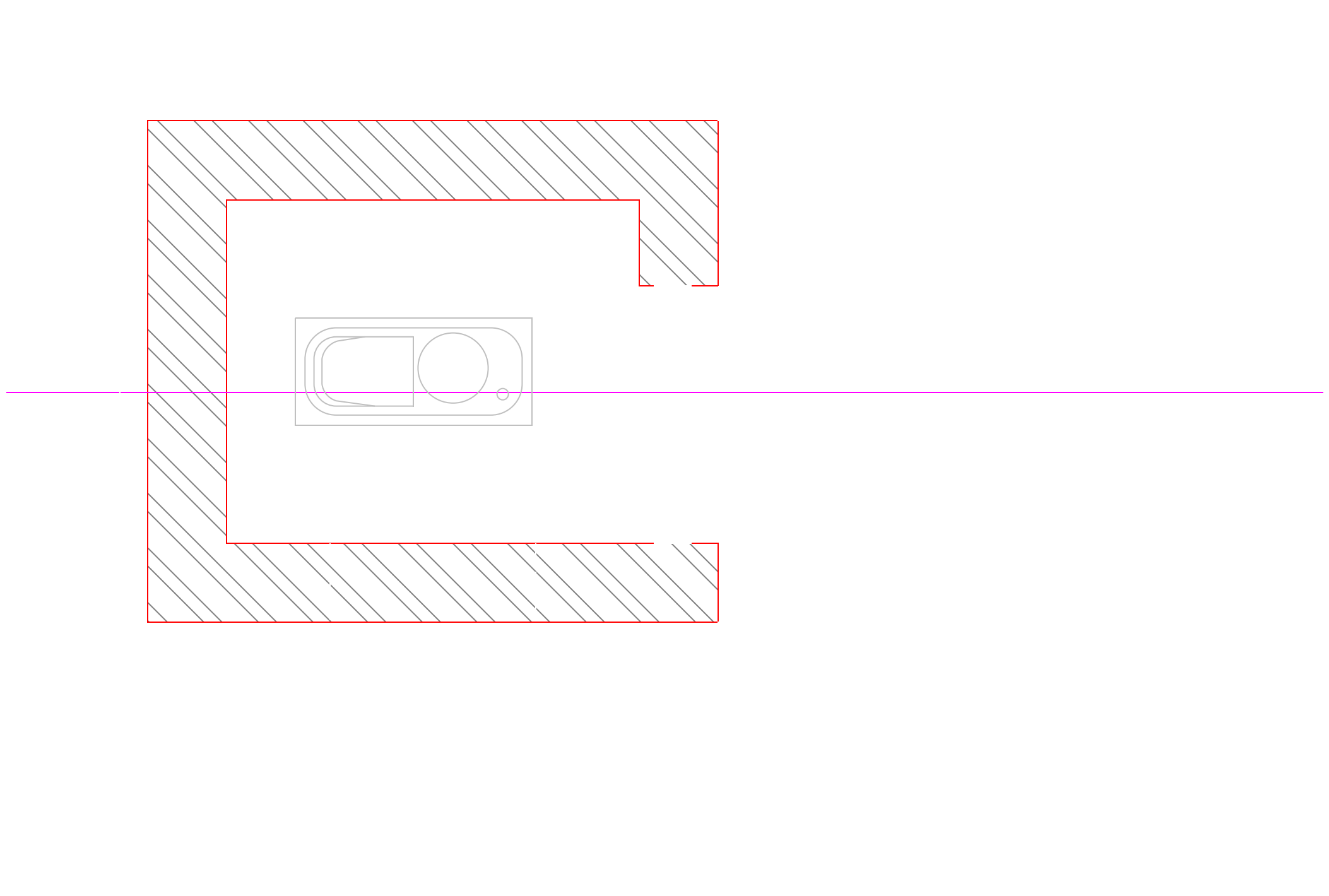
3010, 1660, 1460, 1200, 1000, 750 (×2), 480, 300 (×2), 230 mm
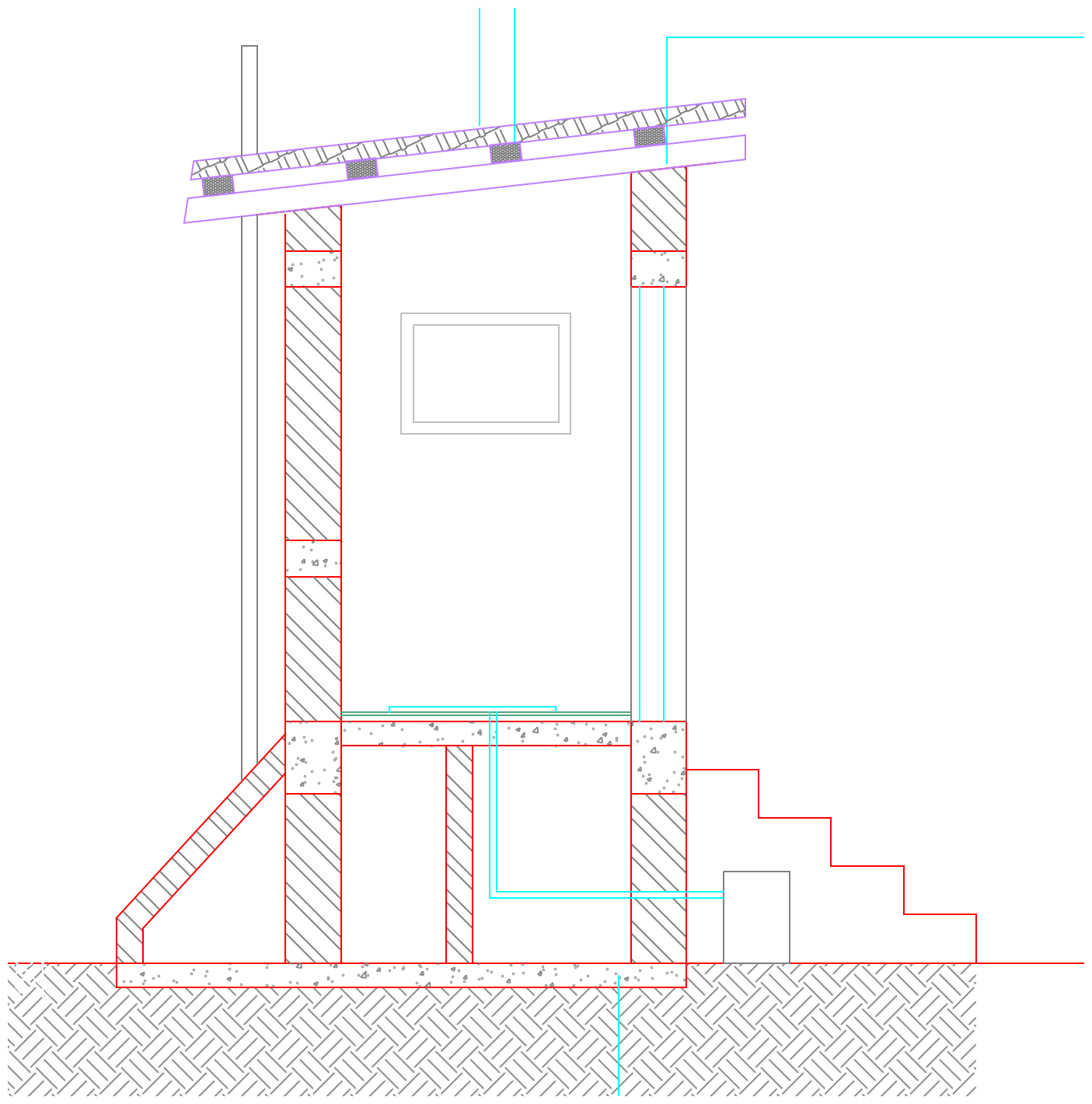
2300, 1050, 1000 (×2), 600, 500, 200, 150 (×3), 100 mm
Urine front, faeces rear
Dries vault, controls odour
Alternating fill / compost
Raised floor ~1.0 m
350 mm stone footing + M20 RC plinth / sill / lintel bands; trench 0.45 m × 0.40 m.
| External footprint | 1.66 m × 1.46 m |
| Internal clear | 1.20 m × 1.00 m |
| Walls | 230 mm brick masonry (1:4), raised ~1.0 m on a twin vault |
| Overall height | 2.30 m |
| Roof | Metal roofing sheet on timber rafters/battens |
| Substructure | Raised twin vault + RCC cover slab + steps |
| Sanitary fixture | UDDT urine-diverting pan + vent pipe + twin masonry vaults |
| Door / window | 0.75 × 1.95 m / 0.45 × 0.45 m |
Quantities by long wall / short wall · District Rate F.Y. 2082/083.
| # | Item of Work | Unit | Qty | Rate | Amount (Rs) |
|---|---|---|---|---|---|
| 1 | Earthwork in excavation (ordinary soil) | m^3 | 1.044 | 554 | 579 |
| 2 | Stone masonry (II class) 1:6 c/s — substructure | m^3 | 0.304 | 6,220 | 1,894 |
| 3 | RC beam & sill bands, M20 1:1.5:3, 100 mm | m^3 | 0.245 | 13,237 | 3,239 |
| 4 | Compacted earth fill | m^3 | 0.240 | 857 | 206 |
| 5 | Sand fill | m^3 | 0.120 | 2,742 | 329 |
| 6 | Brick soling, 1 flat layer | m^2 | 1.200 | 858 | 1,029 |
| 7 | PCC 1:3:6, 100 mm thick | m^3 | 0.120 | 11,199 | 1,344 |
| 8 | 50 mm cement-sand screed / punning floor | m^2 | 1.200 | 834 | 1,001 |
| 9 | 12 mm non-slippery stone (slate) flooring | m^2 | 1.200 | 1,737 | 2,085 |
| 10 | 1st class brickwork in 1:4 c/s mortar — walls | m^3 | 2.417 | 13,675 | 33,046 |
| 11 | 12 mm cement plaster 1:4 | m^2 | 21.142 | 492 | 10,404 |
| 12 | Woodwork for frames (Sal) — door & window | m^3 | 0.051 | 221,281 | 11,197 |
| 13 | Woodwork for shutters (panelled) | m^2 | 1.357 | 9,326 | 12,655 |
| 14 | Roof timber — rafters 75x50 + battens 50x25 | m^3 | 0.063 | 141,101 | 8,889 |
| 15 | CGI sheet roofing, 0.5 mm incl. fixing | m^2 | 2.787 | 1,108 | 3,089 |
| 16 | Reinforcement, TMT bars (cut/bend/fix) | kg | 42.950 | 136 | 5,854 |
| 17 | Steps — mass concrete M20 | m^3 | 0.425 | 12,828 | 5,456 |
| 18 | RCC slab roof, M20 1:1.5:3 (excl. steel/formwork) | m^3 | 0.120 | 14,537 | 1,744 |
| 19 | Formwork / shuttering for slab | m^2 | 1.200 | 1,060 | 1,272 |
| 20 | UDDT urine-diverting pan set | set | 1.000 | 6,022 | 6,022 |
Completely WATERLESS — ideal where water is scarce
Urine diversion + twin vaults = safe reuse / composting
No soak-pit needed — suits the impermeable red-clay soil
True eco-sanitation; nutrients returned to farmland
Bhadaure’s flagship eco-san solution — works with no water and on expansive clay where soak-pits fail.
Every item uses a District Rate Analysis (DRA) to the F.Y. 2082/083 rate book.
Material cost (cement, brick, stone, sand, steel…)
Labour (skilled + unskilled days × wage)
Tools & plant = 3% of labour
Overhead & profit = 15%
Materials travel from the vendor to the site by tractor: 5.8 km on a rough tractor-only road + 1.1 km on pitched (paved) road.
Tractor-only road · 5.8 km
District Rate 2082/083 — Rs 14.00 / quintal·km (ट्र्याक्टर मात्र चल्ने सडक).
Paved road · 1.1 km
District Rate — Rs 3.45 / quintal·km (पक्की सडक).
Load + unload
Handling charge — Rs 0.55/kg (easy) or Rs 1.15/kg (fragile).
| Model | Works | Labour* | Carriage | VAT 13% | FINAL (Rs) |
|---|---|---|---|---|---|
| Opt 1 · Brick · CGI · SATO | 102,796 | 22,084 | 12,945 | 15,581 | 135,434 |
| Opt 2 · Ferro-cement · Steel pan | 52,629 | 17,997 | 4,436 | 7,692 | 66,863 |
| Opt 3 · Brick · RCC · Tank + Basin | 120,384 | 25,612 | 13,679 | 18,054 | 156,933 |
| Opt 4 · Stone · Slate | 105,893 | 23,009 | 22,395 | 17,228 | 149,752 |
| Opt 5 · UDDT (waterless) | 111,332 | 23,546 | 13,610 | 16,821 | 146,217 |
*Labour is already included inside the works figure (shown for information, not added again). Each rate also loads 3% tools + 15% overhead & profit.
Option 2 (ferro-cement) is cheapest; Option 3 (flush · tank · wash basin) is dearest — driven by its richer works content. With tractor carriage, transport is no longer the main cost driver.
Stacked build-up: works + 4% contingency + carriage + 13% VAT.
By tractor (District Rate 2082/083) carriage is far below mule haulage. Heavy stone (Opt 4) and brick (Opt 1, 3, 5) still carry the most weight; load/unload is a fixed handling charge.
Direct wages embedded in the works rates — skilled @ Rs 1,150/day, unskilled @ Rs 585/day.
| Option | Water need | Durability | Cost (Rs) |
|---|---|---|---|
| Opt 1 · Brick · CGI · SATO | Low | High | 135,434 |
| Opt 2 · Ferro-cement · Steel pan | Low | Medium | 66,863 |
| Opt 3 · Brick · RCC · Tank + Basin | High | High | 156,933 |
| Opt 4 · Stone · Slate | Low | Very high | 149,752 |
| Opt 5 · UDDT (waterless) | None | High | 146,217 |
Each toilet discharges to a leach pit. A complete disposal system = one pit type (dry or wet) + one interconnection. Quantities are sized for 5 users; rates include tractor carriage (Rs 139.99/quintal), 4% contingency and 13% VAT.
Dry leach pit
Single pit, honeycomb-brick lining + RCC cover slab. Suits low-water toilets (SATO / squat / pour-flush).
Wet twin-circular pit
Twin pits, deeper, with extra honeycomb lining. Essential for the flush toilet (Option 3) and its higher water load.
Interconnection · Alt 1
75 mm pipes + bifurcation chamber — the lower-cost connection.
Interconnection · Alt 2
Covered brick drains — slightly higher cost, no pipework.
| System · pit + interconnection | Final (Rs) |
|---|---|
| Dry pit + Alt 1 · piped + chamber lowest | 29,641 |
| Dry pit + Alt 2 · covered drain | 32,581 |
| Wet twin pit + Alt 1 · piped + chamber | 38,134 |
| Wet twin pit + Alt 2 · covered drain | 41,075 |
| Option | Toilet only | + Dry·Alt 1 | + Dry·Alt 2 | + Wet·Alt 1 | + Wet·Alt 2 |
|---|---|---|---|---|---|
| Opt 1 · Brick · CGI · SATO | 135,434 | 156,236 | 157,575 | 162,205 | 163,544 |
| Opt 2 · Ferro-cement · Steel pan | 66,863 | 87,665 | 89,004 | 93,633 | 94,973 |
| Opt 3 · Brick · RCC · Tank + Basin | 156,933 | — | — | 183,703 | 185,043 |
| Opt 4 · Stone · Slate | 149,752 | 170,554 | 171,893 | 176,523 | 177,862 |
| Opt 5 · UDDT (waterless) | 146,217 | 167,019 | 168,358 | 172,987 | 174,327 |
No water? → UDDT
Option 5 is waterless and needs no soak-pit — the strongest fit for Bhadaure’s clay soil and water scarcity.
Tight budget? → Ferro-cement
Option 2 is the cheapest at Rs 66,863, light to carry, quick to build.
Water available? → Brick + RCC
Option 3 gives piped water, a wash basin and a durable roof for full service.
Simple & affordable → Brick + CGI
Option 1 is a familiar, low-cost masonry toilet with a water-saving SATO pan.
Local stone? → Stone + slate
Option 4 is durable and traditional; with tractor access its carriage is modest — cheaper still if stone & slate are sourced locally.
Carriage now modest
With tractor access at District Rate, carriage is only ~10–20% of works — no longer the main driver. Local sand/stone trims it further.
The UDDT (Option 5, Rs 146,217) is the best technical fit for Bhadaure — waterless and soak-pit-free.
Option 2 (ferro-cement, Rs 66,863) is the lowest-cost; Option 3 (flush · tank · basin, Rs 156,933) is the highest, due to its richer works content.
Carriage is by tractor at District Rate 2082/083 (5.8 km tractor-only road + 1.1 km paved + load/unload) — far below mule haulage; local sourcing trims it further.
All quantities use the long wall / short wall method at District Rate 2082/083, verified against the option drawings.
Included
Civil works, sanitary fixtures, roof, steps, labour, tools, 15% OH&P, 4% contingency, carriage and 13% VAT.
Excluded
Land, water-source development, approach works, electrical, and any site-specific foundation upgrades.
Assumptions
Internal clear 1.2×1.0 m; brick 230 mm, stone 350 mm, ferro ~50 mm; mono-pitch roofs use average eave height.
To confirm
Pitched-road vehicle rate (assumed Rs 8/q·km), fixture market prices, and whether stone/sand are locally available.
Present these five costed options; let households pick by water access, budget and soil.
Lock fixture prices and the pitched-road vehicle rate; check local stone/sand sourcing.
Finalise foundations & vault details for the chosen model on each plot.
Procure materials, arrange carriage, schedule masons with community labour.
Construct, inspect against the QCS, and document for the next phase.
The estimates price all labour at district wage rates. Bhadaure’s households are ready to contribute “sweat equity” — which directly reduces the cash cost.
Unskilled labour
Households can do excavation, carriage assistance, and helper work — a large share of the unskilled days.
Local materials
Stone, sand and aggregate gathered locally cut both material and carriage costs sharply.
Cash saving
Every unskilled day contributed saves ~Rs 585; local sourcing can save tens of thousands on carriage.
Thank You
Five fully-costed sanitation designs for the Bhadaure settlement — ready for community selection and tendering.
Bhadaure Eco-Sanitation Team · IOE Pulchowk Campus · District Rate F.Y. 2082/083